What Are Pork Hocks?
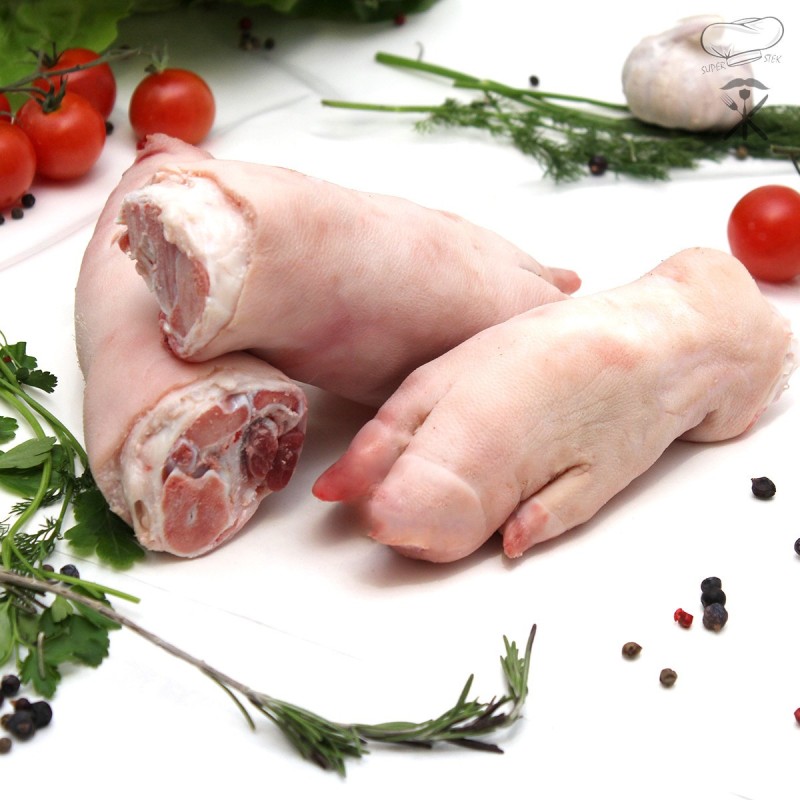
Pork hocks are the front or back legs of a pig that contain a lot of connective tissue, collagen, and bone marrow. They are highly valued in cooking for their thickening and flavoring properties, making them an excellent ingredient for broths, jellies, and stews.
✅ Natural source of collagen – excellent for joint and skin health
✅ Ideal for cooking rich broths and jellies
✅ Perfect for traditional and Asian cuisine
✅ Gives dishes a smooth, gelatinous texture
✅ Great for long-cooked broths and stews
Nutritional Value of Pork Hocks
Pork hocks are not only an excellent culinary ingredient but also nutrient-rich. They are high in protein, collagen, and healthy fats, which support joint and skin health.
How Many Calories Are in Pork Hocks?
In 100g of pork hocks:
- Calories – about 210 kcal
- Protein – 19 g
- Fat – 15 g
- Collagen – high content
- Calcium – 25 mg
- Iron – 1.3 mg
Health Benefits of Pork Hocks
✔ Rich source of collagen, supports healthy joints, skin, and hair.
✔ Aids in body regeneration due to high protein and amino acids content.
✔ Excellent for broths and soups, which boost immunity and provide energy.
✔ Natural source of calcium and minerals supporting strong bones and healthy joints.
Interesting Facts About Pork Hocks
🥩 Pork hocks are a staple ingredient in classic broths in Chinese and Japanese cuisine! They give ramen its deep flavor and creamy texture.
🔥 In Poland, pork hocks are the main ingredient in traditional "zimne nóżki" – meat jelly served with vinegar and horseradish!
Frequently Asked Questions (FAQs)
• How long should you cook pork hocks to make them soft?
To achieve ideal softness and a gelatinous consistency, pork hocks should be cooked for at least 3-4 hours on low heat.
• Can pork hocks be baked?
Yes, they can be pre-cooked and then baked with spices and sauces to achieve a crispy skin.
• Are pork hocks healthy?
Yes! They are rich in collagen, protein, and healthy fats, supporting joint health, skin, and immunity.
• What dishes can be made with pork hocks?
The most popular include pork jelly, ramen broth, tripe, long-cooked broths, and hocks braised in soy sauce.
Recipe for Traditional Pork Jelly (“zimne nóżki”)
Aromatic, rich in collagen, and full of traditional flavor – meat jelly is a perfect snack for any occasion!
Preparation time: 30 min
Cooking time: 4 h Difficulty level: medium
Ingredients:
- 2 pork legs
- 1 carrot
- 1 parsley root
- 1 onion
- 2 bay leaves
- 4 allspice berries
- 2 teaspoons of salt
- 1 teaspoon of pepper
- 2 garlic cloves
- 1 tablespoon of vinegar (for serving)
Preparation method:
- Thoroughly clean the pork legs and singe the skin over a flame to remove residual hairs.
- Cover with cold water and simmer for about 4 hours, skimming off any scum.
- Add vegetables, spices, and garlic, cook for another hour until the meat starts to fall off the bones.
- Remove the meat and vegetables, then strain the broth through a sieve.
- Cut the meat into pieces, place it in bowls, and pour over the hot broth.
- Allow to cool, then refrigerate for several hours.
Serve with vinegar or horseradish – a classic taste of tradition!
Summary – Why choose pork legs?
Pork legs are an irreplaceable ingredient in broths, aspics, and slow-cooked dishes, providing natural collagen and full flavor. With their rich nutritional value, they support healthy joints, skin, and immunity.
✅ Natural source of collagen and protein
✅ Excellent for broths, aspics, and stewed dishes
✅ Give dishes an essential taste and creamy consistency
✅ Traditional ingredient in Polish and Asian cuisine
🛒 Grab pork legs and prepare essential dishes full of flavor and nutritional value! 🥩🔥

 Polski
 Deutsch




.webp)